

Crafting the First Pieces: The Origins of DINARA
The spark came during lockdown. Unlike peers, who doubled down on online classes, Nooran wanted to channel her time into building something tangible. Her first experiment was simple: scrunchies.
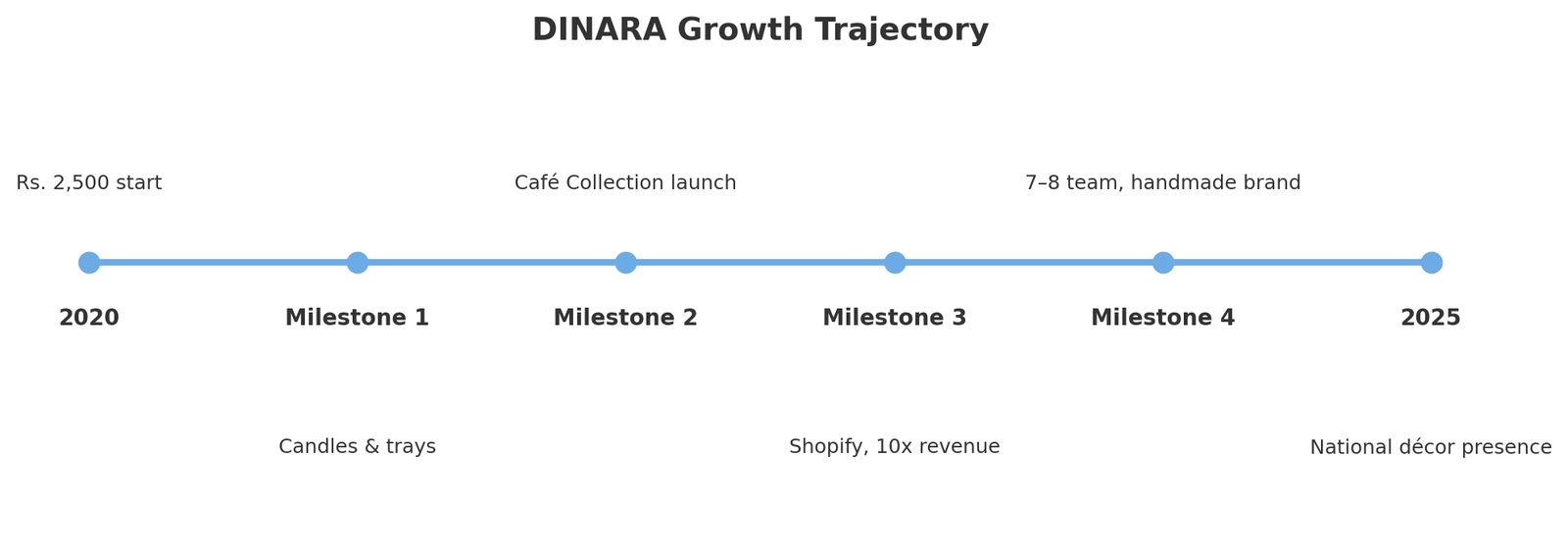
She bought a sewing machine from Daraz for Rs. 2,500, stitched scrunchies from leftover fabric, and launched them on Instagram. Orders began to trickle in. The first time a stranger paid for her product, the feeling was unforgettable.
“Main bilkul black swan case thi, Corona chal raha tha, aur mujhe laga ke kuch karna chahiye.”
Translation: “I was the black swan, during COVID I felt I had to do something.”
Initially, the brand went through several names like scrunchies.pk, Cherry Blossom, Efflorescence, before settling on DINARA, a name discovered on Pinterest, derived from dinar, meaning valuable or precious.
The early days were far from smooth. Orders were dispatched through Sargodha’s post office, each requiring long handwritten forms. Customers sometimes received damaged items due to rough courier handling. At home, experiments occasionally went wrong: once, paraffin wax caught fire in her kitchen, forcing her to pause candle production for a week.
Yet each challenge strengthened her determination. Inspiration also came from family.
“Mujhe Ammi se bohot motivation mili, woh apni boutique chalati thi aur ghar se tailor manage karti thi.”
Translation: “I got a lot of motivation from my mother, she ran her own boutique and managed tailors from home.”
Her close friend Moosa also pushed her toward financial independence. Together, they developed the mindset that no matter the background, “we have to stand on our own feet.”
“Pehla order aaya to main ghar mein daur rahi thi, ‘Ammi, Abbu, order aa gaya!’”
Translation: “When the first order came, I ran around the house shouting, ‘Mom, Dad, we got an order!’”
Breaking the Mold: Turning a Lockdown Mindset into a Builder’s Mindset
The real challenge DINARA faced was not money, it was mindset. At 15, entrepreneurship wasn’t the “normal” path. The cultural expectation was clear: excel in school, focus on grades, and think about careers later.
DINARA disrupted that script.
“Mere dost sab studies mein busy thay par mujhe laga grades sab kuch nahi hotay.”
Translation: “My friends were all busy with studies but I felt grades weren’t everything.”
This cultural resistance made the first steps lonelier, but also more important. By pursuing entrepreneurship during lockdown, Nooran showed that young people could lead businesses even before university.
Her first major real-world test came at Haryali Market in Lahore, a women-led pop-up platform. Preparing for the stall meant three months of work with limited molds, making ten pieces of each item. But political protests blocked her travel from Sargodha, forcing her to miss the event and lose her investment.
“That day I cried the whole night, three months of hard work went to waste.”
The setback was painful, but it deepened her resolve. At her next Haryali Market, customers embraced her products, praising her youth and creativity. One elderly man even bought a pink bubble candle as a gift for his wife, calling it “unique.”
This validation proved that despite cultural doubts, Pakistani consumers valued originality and effort.
Scaling DINARA Beyond the Dining Table: From Craft to Recognized Brand
As demand grew, DINARA faced the challenge of scale. Customers were ordering through Instagram DMs, every detail written in a notebook. Dispatching, tracking, and responding consumed endless hours. By 2023, the system was unsustainable.
That’s when Moosa, a childhood friend and classmate, formally joined. With his skills in web development, he built DINARA’s Shopify site. The difference was transformational.
“After Shopify I realized, what I earned earlier was barely 10% of what we make now.”
1. Innovating Décor for Pakistan: From Bubble Candles to the Café Line
The first handmade products were bubble candles and oval trays. Over time, experimentation expanded the line into trays, coasters, and especially candles. DINARA’s Café Collection became iconic: Ice Brew Coffee (the bestseller), Croissant, Matcha Latte, and Toast Omelette. Customers loved the realistic designs, so lifelike that many thought they were actual food.
Curated bundles emerged as another strategy. Instead of buying single pieces, customers could purchase a full décor set. Bundles not only increased sales but also solved a real customer problem: styling a space easily.
2. The Art of Premium: DINARA’s Design Identity
From the start, visuals mattered. Nooran designed the logos herself, drew inspiration from editors and iPads, and maintained a cohesive color palette. Packaging, developed with a designer, gave the products a polished look. Instagram feeds and the Shopify site reflected a consistent, minimal, and warm identity. This premium perception distinguished DINARA from unbranded imports or inconsistent local sellers.
3. Teaching the Home: Community, Pop-Ups, and UGC
Community was critical. DINARA actively participated in pop-ups like Haryali, where customers could see, touch, and smell the handmade quality. Online, the brand embraced UGC (user-generated content). Each month, 4–5 PR packages were sent to creators whose feeds matched the brand’s aesthetic. Their videos were then used as ads, generating authentic engagement.
One of DINARA’s most touching customer experiences came with the Nostalgia 2000 candle, scented like baby powder. When a man in his 30s smelled it at a stall, he was instantly transported back to childhood.
“Yeh khushboo ne mujhe bachpan yaad dila diya—yeh bohot khaas hai.”
Translation: “This scent reminded me of my childhood—it’s very special.”
Stories like this reinforced that décor is not just visual, it can be emotional.
4. Building a Team
As university studies (law) demanded more time, Nooran and Moosa realized they couldn’t manage production alone. They hired helpers, first one, then several, until DINARA became a team of 7–8, with dedicated roles for candles, cement décor, and logistics. At ages when most peers were still interning, they were already managing payrolls.
Home Décor Market in Focus: Key Trends and Consumer Behavior (Pakistan)
- Growing Home Décor E-commerce: Pakistan’s home décor e-commerce market was valued at US$387 million in 2024, growing at 15–20% annually into 2025 (ECDB, 2025).
- Handicrafts Expansion: Pakistan’s handicrafts market is projected to grow at ~7% CAGR through 2031, driven by rising urban interest in handmade goods (6WResearch, 2023).
- Youth and Instagram: With 18.8 million Instagram users in Pakistan (early 2025), platforms like Instagram are primary discovery channels for aesthetic products (DataReportal, 2025).
- E-commerce Growth with COD Dominance: The State Bank reported 309 million e-commerce transactions worth PKR 406 billion in FY 2024, but ~75% of orders remain COD (SBP, 2024). This aligns with DINARA’s adoption of COD-friendly courier services.
- Consumer Shift to Lifestyle Spending: Surveys suggest 65% of urban Gen Z and Millennials in Pakistan are willing to pay more for creative, original home and lifestyle products (Euromonitor, 2023).
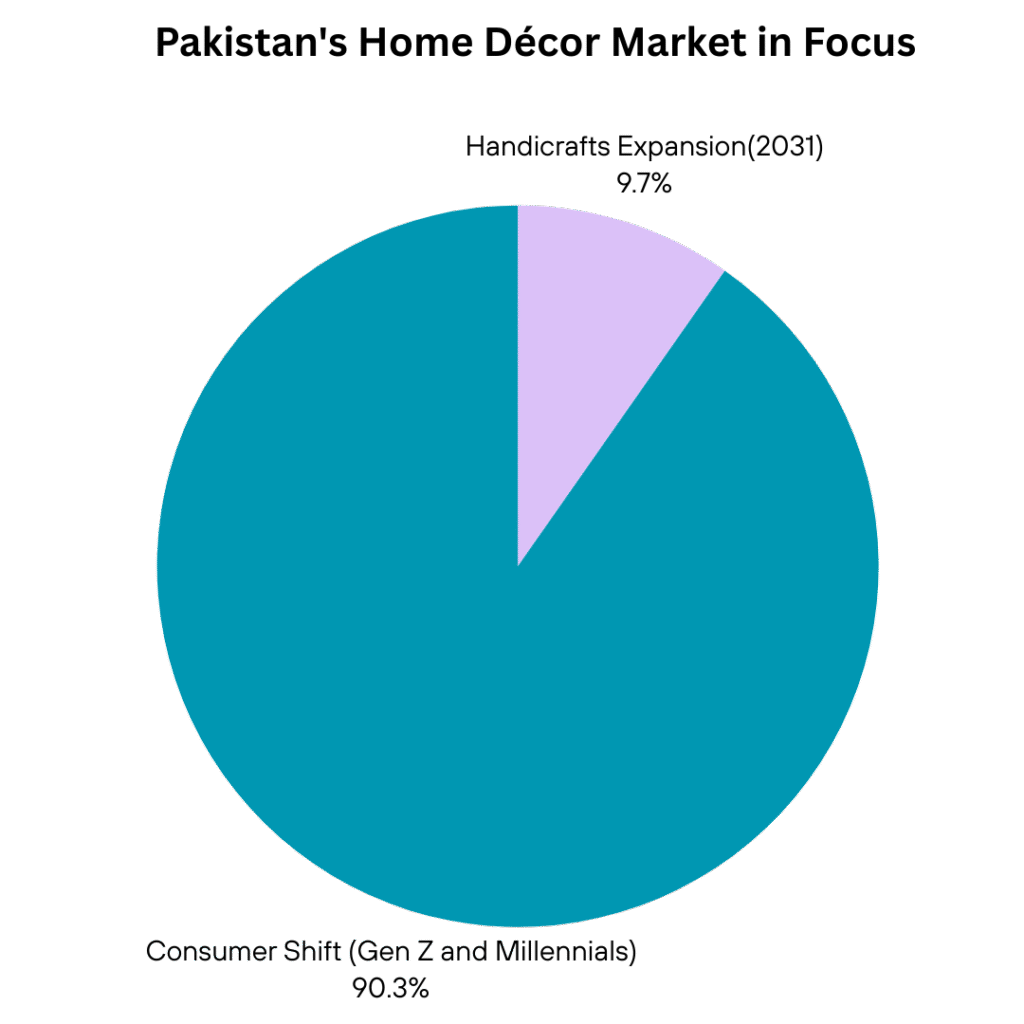
Together, these trends validate DINARA’s model: Instagram-first, COD-enabled, design-led, and focused on originality in a market ripe for handmade décor.
Competitive Advantage Analysis – DINARA vs Competitors
Competitive Advantage Analysis – DINARA vs Competitors
- Authenticity: Unlike resellers or white-label imports, DINARA creates every product in-house.
- Origin Story: Starting at age 15 makes the brand relatable to Pakistan’s massive youth segment.
- Bundling Strategy: Curated deals simplify decisions and increase cart sizes, a rare tactic in small décor businesses.
- Design Consistency: A premium, cohesive aesthetic differentiates DINARA from low-quality alternatives.
- Community Engagement: UGC and pop-ups drive loyalty, while competitors often rely on generic marketing.
- Trust Policies: Clear refund and replacement rules for fragile items reassure customers, an uncommon practice in small businesses.
- Authenticity: Unlike resellers or white-label imports, DINARA creates every product in-house.
Lessons Learned from DINARA’s Journey
DINARA’s Journey
1.Turning Constraints into Opportunities: Lockdown wasn’t wasted, it became the catalyst for creation.
↓
2. Early Independence Builds Confidence: Even small sales gave the courage to expand.
↓
3. Systems Create Scale: Moving from DMs to Shopify multiplied earnings and freed time.
↓
4. Design Is Strategy: Bundles, Café Collection, and visuals weren’t just aesthetics, they drove conversion.
↓
5. Community Is Currency: Pop-ups and UGC nurtured trust faster than paid ads alone.
What DINARA’s Journey Teaches Us
Think of DINARA as a candle lit in darkness. At first, it’s fragile, just a flame fighting against isolation. But as it grows, it brightens the room, drawing others in.
DINARA’s story proves that when opportunities seem absent, young people can create their own. By blending persistence with creativity, and systems with storytelling, a teenager built a décor brand that not only sells but inspires.